When travelers think of Albania today, their minds naturally drift to the pristine waters of the Albanian Riviera, the jagged peaks of the Accursed Mountains, and vibrant, colorful Tirana. But hiding in plain sight across this beautiful landscape is the physical legacy of one of the 20th century’s most isolated and secretive regimes.
For nearly half a century, under the iron-fisted rule of dictator Enver Hoxha, Albania was often referred to as the “North Korea of Europe.” Today, the remnants of his intense paranoia have become the foundation for a fascinating travel niche: dark tourism.
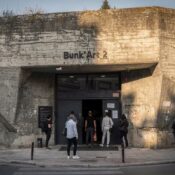
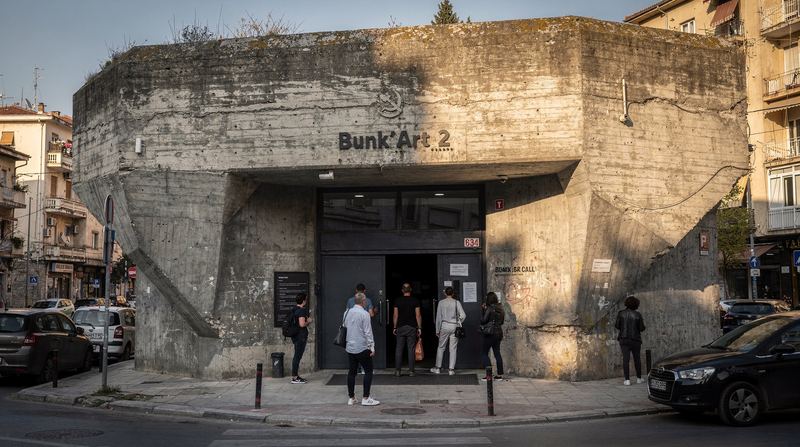
(Insert Image: The entrance to Bunk’Art 2 or a scenic shot of a bunker in the Albanian landscape)
The Ultimate Paranoia: A Nation of Bunkers
If there is one enduring symbol of the country’s communist-era paranoia, it is the bunker. Convinced that an invasion by NATO, the Soviet Union, or neighboring countries was imminent, Hoxha launched a massive “bunkerization” program in the 1970s.
Over 170,000 concrete pillboxes were built across the country. They were placed everywhere: on strategic mountain passes, buried in city centers, and even dotted along the beautiful sandy beaches. The invasion, of course, never came.
Today, these structures are the crown jewels of Albanian dark tourism. In Tirana, two massive underground nuclear shelters have been transformed into Bunk’Art 1 and Bunk’Art 2. These immersive museums take visitors deep underground, walking them through decontamination rooms, secret communication centers, and quarters meant to house the elite in the event of a nuclear holocaust. They serve as a chilling, tactile reminder of a government terrified of the outside world.
Holidays Under Surveillance: Tourism in the Communist Era
To truly understand Albanian dark tourism, you have to look at what tourism actually looked like during the regime. Unsurprisingly, it was highly restricted, deeply paranoid, and completely controlled by the state.
Foreign tourism officially began around 1956 with roughly 250 visitors, eventually maxing out at just 15,000 annually by the early 1990s as the state desperately needed foreign currency. Every single itinerary was tightly managed by the state-owned tourism enterprise, “Albturist”.
Entering Albania for a holiday meant passing a rigorous ideological purity test at the border:
- Barbers and Tailors at the Border: Border control wasn’t just about checking passports. Tourists were met by state barbers and tailors. If a male tourist had long hair—considered a dangerous “foreign influence”—he was forced to get a haircut right there at the border crossing before being allowed in.
- Fashion Policing: If you wore flared “cowboy” jeans, the tailor would forcefully narrow them. If a woman wore a miniskirt, she was required to wear trousers underneath or buy local, modest clothing.
- The “Bugged” Vacation: Albturist was heavily infiltrated by the Sigurimi (the Albanian secret police). Many tourists were kept under strict surveillance, and their hotel rooms were routinely bugged. Secret microphones were famously hidden inside mundane objects like tobacco pipes, ashtrays, and wooden boxes.
- Isolation: Foreigners were strictly forbidden from interacting with everyday Albanian citizens, and photographing anything deemed “strategic” was strictly outlawed.
While tourists ate partridge and drank cognac in designated coastal hotels like the Adriatik in Durrës, local citizens were relying on ration coupons just to secure daily bread.
The Mechanics of Fear: The House of Leaves
The nerve center for all this surveillance—both on foreign tourists and everyday Albanians—is now another major dark tourism site. The House of Leaves (Shtëpia e Gjetheve) in Tirana was the former headquarters of the Sigurimi.
Today, it is the Museum of Secret Surveillance. Walking through its rooms, visitors can see the very wiretapping equipment, hidden cameras, and meticulous files used to monitor citizens and visitors alike. It is a profound, unsettling look into how absolute power sustains itself through absolute observation.
The Gulag of the Balkans: Spaç Prison
While the bunkers in the cities represent the regime’s paranoia regarding the outside world, you have to travel deep into the remote mountains of the Mirditë region to witness how the state treated its own people. Here lie the haunting ruins of Spaç Prison (Burgu i Spaçit), a notorious forced labor camp modeled directly after Stalinist gulags.
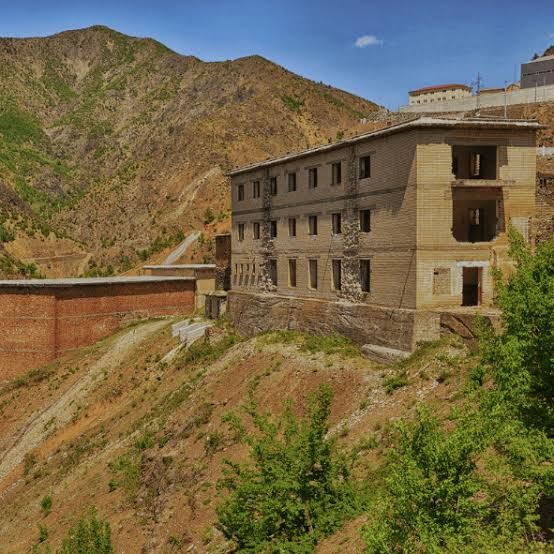
(Insert Image: The remote, crumbling ruins of Spaç Prison in the mountains)
Opened in 1968, Spaç was designed to break the spirits of Albania’s political prisoners—intellectuals, writers, artists, and anyone accused of speaking out against Enver Hoxha’s regime. The location was intentionally chosen for its harsh, unforgiving geography. In the blistering heat of summer and the freezing, snow-locked isolation of winter, prisoners were forced into backbreaking labor, extracting copper and pyrite from the surrounding mines with little more than primitive tools and starvation-level rations.
A Flash of Defiance: In 1973, Spaç became the site of a legendary uprising. Pushed beyond human endurance, prisoners revolted, seized control of the camp for three days, and remarkably, raised a makeshift Albanian flag without the communist red star. The rebellion was brutally crushed by special forces, and its leaders were executed, but the event remains a profound symbol of anti-communist resistance.
Unlike the well-restored, immersive Bunk’Art museums in Tirana, Spaç is a raw, visceral experience. The site is currently in an arrested state of decay. Roofs have caved in, rusted iron bars still cover shattered windows, and communist slogans can still barely be seen fading on the decaying walls.
For the dedicated dark tourist, visiting Spaç is an essential pilgrimage. Standing on the crumbling terraces overlooking the gorge, the sheer isolation of the camp hits you. It is a sobering, profoundly moving testament to the thousands who suffered there, and an experience that standard glossy tourist brochures simply cannot capture.
Why Dark Tourism Matters
Why do we visit places associated with fear, surveillance, and suffering? In Albania, dark tourism isn’t about sensationalism; it’s about education, preservation, and triumph. By walking into the bunkers and the interrogation rooms, we honor the resilience of the Albanian people who survived the regime and eventually tore it down.
It transforms architecture built for paranoia and oppression into spaces of reflection and freedom.
Want to experience this history firsthand? At Travel Team Albania – DMC, we go Beyond The Map. We believe that guiding is a pleasure, but also a responsibility—one that our local experts take very seriously. Whether you want to explore the subterranean tunnels of Bunk’Art, walk the halls of the House of Leaves, or take a sobering day trip into the mountains to witness Spaç Prison, we handle all the complex logistics so you can experience the authentic stories of Albania.
Let us design a tailor-made, seamless journey into Albania’s past.