
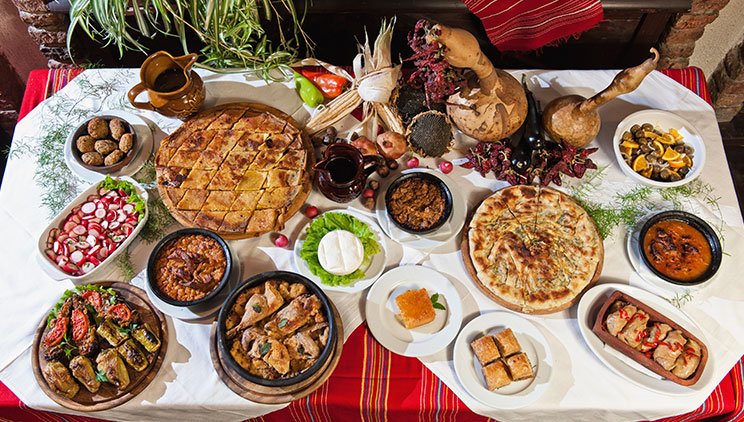
Explore the regional tastes, historic roots, and spiritual essence of Albanian cuisine
Albanian cuisine is a vivid reflection of the country’s history, geography, and spiritual traditions. Rooted in rural life, shaped by centuries of Ottoman, Mediterranean, and Balkan influences, and recently rejuvenated by a cultural revival post-Communism, Albanian food is as much about family and hospitality as it is about flavor.
🧭 1. Geography Meets Gastronomy
The diversity of Albanian landscapes—coastal plains, fertile valleys, alpine meadows—translates directly to its regional culinary richness:
🏔️ Northern Highlands (Shkodra, Tropoja, Kukës)
-
Strong, meat-based dishes: fergese me mish, smoked lamb, veal stews.
-
Cornbread (kulaç) and wild herbs dominate the diet.
-
Preserved foods like pickles, dried peppers, and cheeses.
🌿 Central Albania (Tirana, Elbasan, Berat)
-
The culinary middle ground: tavë kosi (baked lamb with yogurt) originates from Elbasan.
-
Vegetable dishes, qifqi (Berat’s rice balls), and byrek pastries.
-
Olive oil and citrus fruits widely used.
🐟 Southern Coast & Riviera (Vlora, Saranda, Himara)
-
Rich in seafood: grilled calamari, mussels from Butrint lagoon, sea bass.
-
Mediterranean flavors: oregano, lemon, tomatoes, olives.
-
Dairy products from the mountains (Labëria region).
📸 Suggested Images:
-
Tavë kosi served hot
-
Fresh seafood platter by the Ionian coast
-
Village women preparing cornbread in wood ovens
🕊️ 2. A Kitchen Silenced: Culinary Loss Under Communism
From 1945 to 1991, Albanian food culture was significantly altered:
-
Private restaurants were banned, and menus were standardized.
-
Luxury ingredients and imported spices disappeared.
-
Religious fasting and holiday foods were suppressed due to the atheist policies.
-
Hospitality traditions were discouraged in favor of collective dining halls.
Yet, in homes and rural villages, recipes were whispered, and customs survived behind closed doors—preserved by grandmothers and passed through generations.
📸 Suggested Images:
-
1980s ration coupons or public dining halls
-
Portrait of an elderly woman making traditional dishes
-
Family table in a countryside setting
🌞 3. A Revival of Taste and Identity
Since the 1990s, there has been a gastronomic awakening in Albania:
-
Young chefs are rediscovering regional recipes.
-
Slow food movements, agrotourism, and culinary tourism are on the rise.
-
Restaurants in Gjirokastër, Berat, and Tirana are reviving pre-communist menus.
-
Food festivals (like the Gjirokastër Culinary Fest) celebrate tradition.
📸 Suggested Images:
-
Chef in a traditional kitchen
-
Slow food lunch with mountain view
-
Organic farm stay offering local tastings
🕌 4. Spiritual Roots and Religious Influence
Albanian cuisine carries traces of the country's multi-religious heritage:
🕌 Islamic Traditions (Sunni & Bektashi)
-
Dishes for Bajram: baklava, pite me gjize (cheese pies), rice with lamb.
-
Respect for halal principles and fasting periods.
✝️ Christian Influences (Orthodox & Catholic)
-
Fasting dishes: beans, olive oil, vegetables without meat.
-
Easter specialties: red-dyed eggs, roasted lamb, sweet breads.
🟢 Bektashi Mysticism
-
Vegetarian meals during pilgrimages and saint days.
-
Dervish-run teqes (lodges) sometimes hosted community feasts.
Despite communism’s attempts to suppress religion, these food traditions were quietly maintained and are now openly celebrated once more.
📸 Suggested Images:
-
Bajram table with sweets and lamb
-
Orthodox Easter bread with dyed eggs
-
Bektashi gathering with shared meal
🍇 5. Key Ingredients in Albanian Cuisine
| Ingredient | Use / Dish Example |
|---|---|
| Olive oil | Base for almost every dish |
| Yogurt | Used in soups, sauces, and tavë kosi |
| Corn flour | For cornbread and porridge (harapash) |
| Feta-style cheese | Found in byrek, salads, or grilled |
| Wild herbs | Like oregano, thyme, and nettle |
| Raki (grape brandy) | Served to guests and at family events |
📸 Suggested Images:
-
Rustic display of ingredients
-
Raki being poured in a village setting
🧁 6. Sweet Traditions and Seasonal Favorites
-
Baklava (Turkish origin, widely Albanianized)
-
Ballokume (Elbasan’s corn-based cookie for Dita e Verës – Spring Day)
-
Petulla (fried dough with honey or cheese)
-
Trileçe (milk cake with Balkan–Latin fusion)
📸 Suggested Images:
-
Ballokume baking for March 14
-
Children eating petulla in the morning
-
Artistic shot of trileçe slice
🏠 7. Hospitality: “Bukë, Kripë e Zemër” (Bread, Salt, and Heart)
In Albania, food is a sacred act of sharing. Guests are always offered something—be it a meal, coffee, or raki. The ancient proverb “Bukë, kripë e zemër” encapsulates the spirit of Albanian hospitality: we may not have much, but what we have, we offer with heart.
📸 Suggested Images:
-
Elderly host offering raki to guest
-
Smiling grandmother welcoming visitors
-
Family gathering around a long table